


Develop Packaging Beyond Existing Mold Options
Custom mold development is suitable for cosmetic brands, importers and packaging companies that require a proprietary bottle, jar, cap or packaging component that cannot be produced from an existing mold.
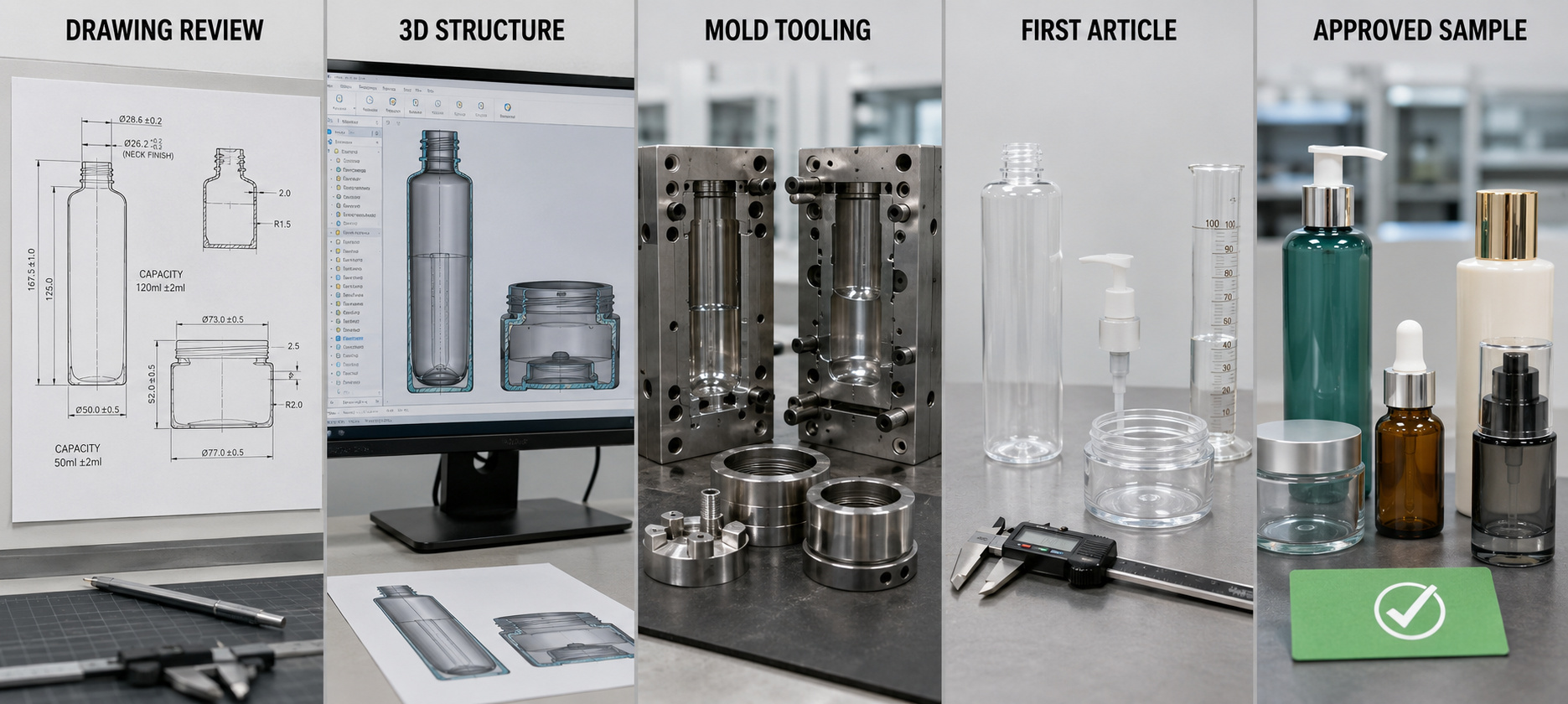
Cavoriq supports mold-development projects for selected plastic and acrylic cosmetic packaging structures. A project may begin with a technical drawing, 3D file, physical reference sample or a clear product brief. Before tooling starts, we review the intended material, capacity, dimensions, wall structure, neck finish, closure type, decoration area and expected order quantity.
For glass, aluminum or bamboo-related structures, production feasibility is assessed with our long-term manufacturing partners. The available development route depends on the material, structure and required manufacturing process.
 Information Required Before Mold Evaluation
A useful mold-development request should include more than an appearance reference. Buyers should provide:
- Packaging type and intended cosmetic application
- Target capacity and overall dimensions
- Preferred material and wall construction
- Neck size and required pump, dropper, sprayer or cap
- Reference drawing, 3D file or physical sample
- Decoration area and surface-finish requirements
- Target order quantity and expected launch schedule
The closure and filling method should be considered during structural development. A bottle may look correct but still require changes if the neck finish does not match the selected pump or if the dip tube, sealing surface or assembly tolerance affects dispensing performance. Our pumps, caps and closure matching process can be incorporated into the mold review.
From Drawing Review to Tooling
The initial review checks whether the proposed shape can be molded consistently and released from the tool without affecting the surface, dimensions or structure. Draft angles, wall thickness, corners, threads, undercuts and assembly points may need adjustment before the drawing is approved.
After the structure is confirmed, the tooling route and estimated mold cost can be quoted. Mold cost depends on the packaging material, component count, cavity arrangement, product size, structural complexity and required surface accuracy. Development should not begin until the buyer approves the technical scope, tooling quotation and sample schedule.
Where an existing mold can achieve a similar result with color, decoration or closure changes, we will identify that option before recommending new tooling. This can reduce investment, MOQ pressure and development time.
Prototype, First Article and Sample Approval
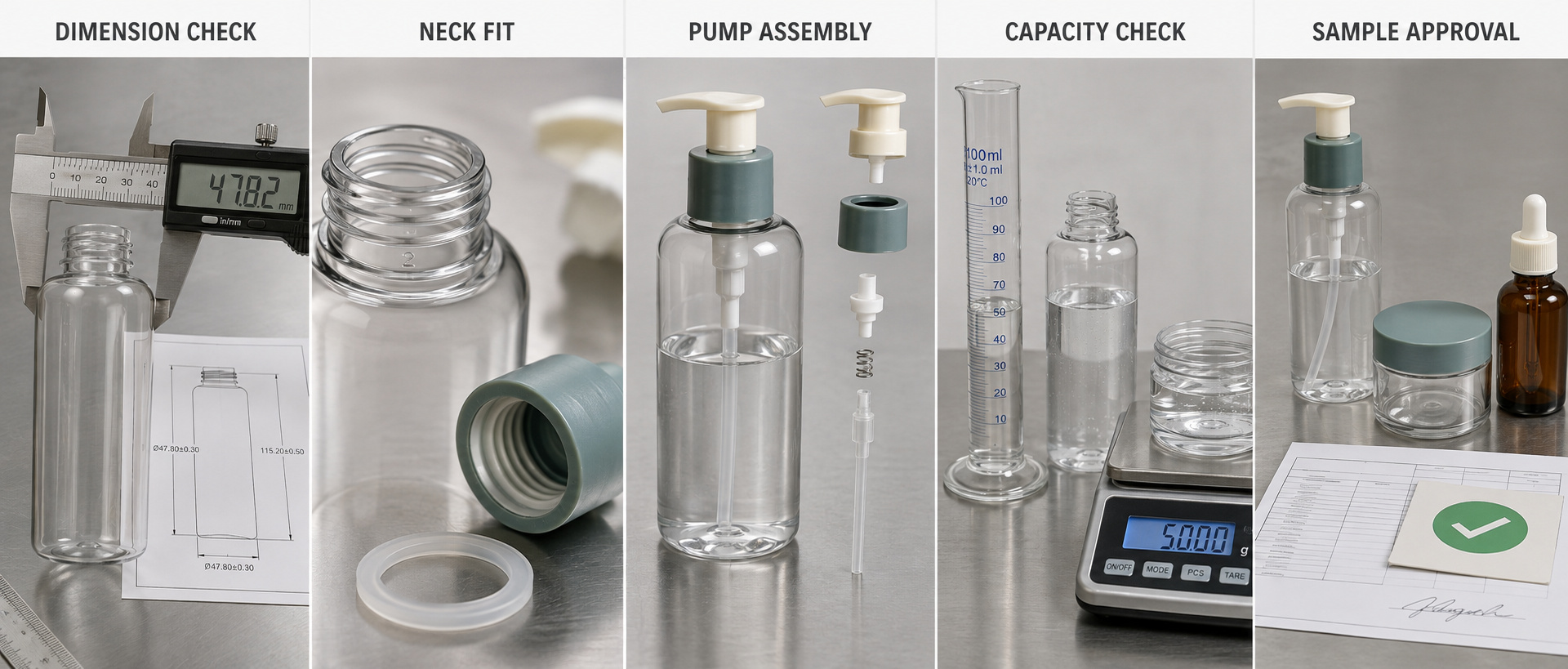
Initial molded samples are checked for dimensions, capacity, appearance, assembly and basic function. They are then compared with the approved drawing or reference sample. Adjustments may be required if there are issues with shrinkage, parting lines, thread engagement, closure fit or component assembly.
New-mold samples generally require approximately 20–35 days, depending on the material and tooling complexity. This is an estimated development range rather than a fixed lead time. The sample route, revision time and production schedule are confirmed for each project.
Buyers should review the physical sample before authorizing mass production. The sample development and approval stage should confirm the structure, color direction, closure combination, decoration position and approved reference standard.
 How Custom Molds Affect MOQ, Cost and Lead Time
A new mold adds tooling cost, technical confirmation and trial production to the purchasing process. MOQ is usually higher than for existing-mold packaging because materials, molding setup, component matching and decoration must be arranged specifically for the project.
After sample approval and deposit, standard mass production normally requires around 25–35 days. Complex structures, multiple customized components or additional mold corrections may extend the schedule to 35–50 days. Final timing is confirmed after the sample and production specifications are approved.
Quality Checks Before Bulk Production
Before a custom-mold order moves into mass production, the first article is checked against the approved specification. Relevant checks may include dimensions, capacity, weight, surface appearance, color, neck finish, closure fitting, leakage, pump operation and assembly stability.
Production samples and final goods should remain consistent with the signed or otherwise approved reference sample. Final inspection may include dimensional checks, appearance inspection, functional testing and AQL-based sampling. More details are available on our quality control and functional testing page.
Request a Custom Mold Evaluation
Send your drawing, reference sample or concept together with the material, capacity, closure, quantity and target schedule. We will assess whether an existing structure can be adapted or whether a new mold is justified, then confirm the development route, estimated tooling cost, sample timing and likely bulk-order requirements.