


Selecting the Appropriate Molding Process
Plastic cosmetic packaging requires different forming methods according to the material, product structure and intended function. Cavoriq uses injection molding and blow molding for selected plastic and acrylic bottles, jars, caps, shoulders and other packaging components.
Injection molding is generally used for rigid parts requiring controlled dimensions, defined threads or detailed structures. Blow molding is more suitable for hollow bottle bodies. Some packaging sets require both processes because the bottle, outer shell, cap and dispensing components may be produced separately before assembly.
The production route is confirmed after reviewing the material, capacity, wall structure, neck finish, closure and target order quantity.
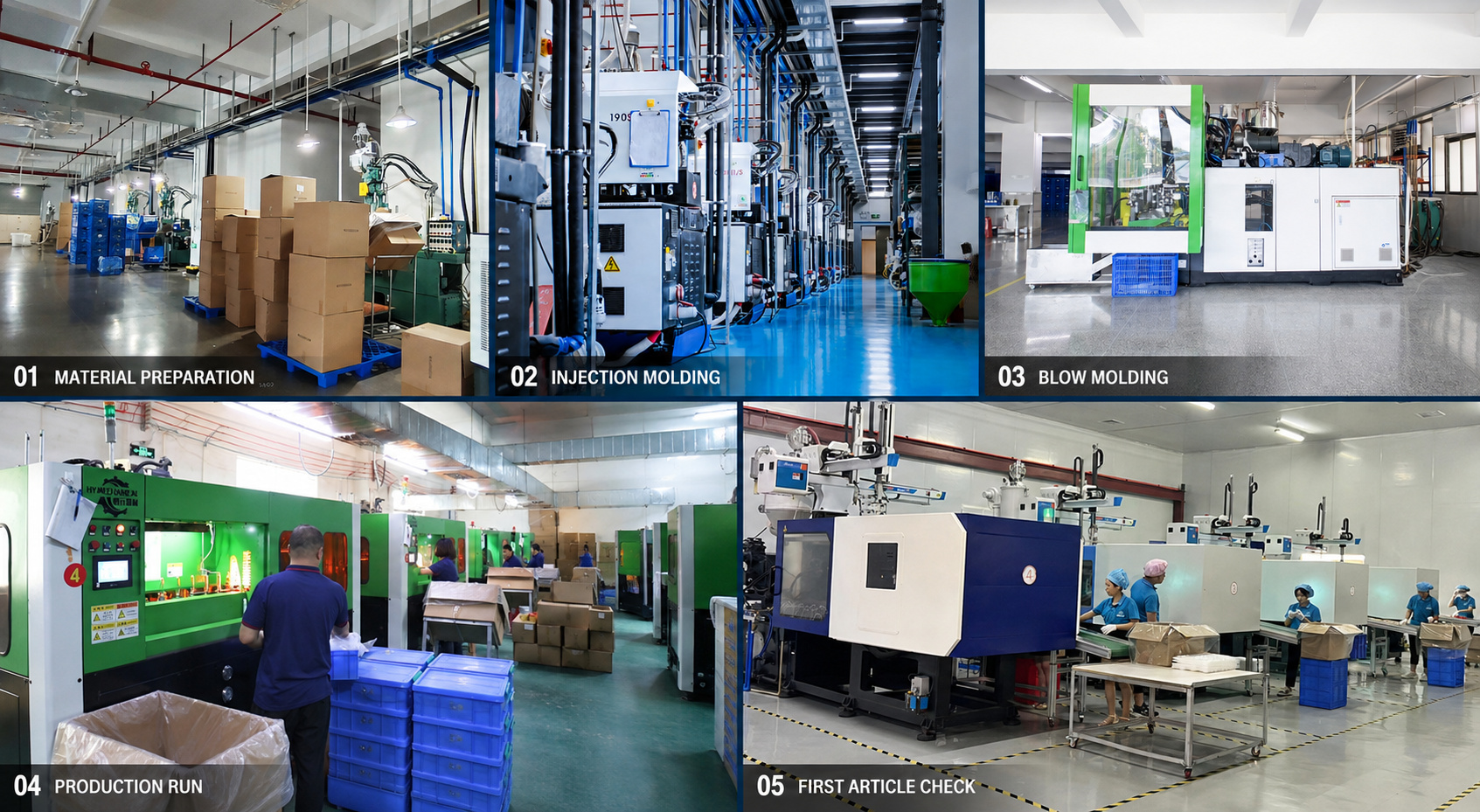 Material Preparation and Production Setup
Common materials for molded cosmetic packaging include PET, PETG, PP, PE and PMMA/acrylic. Each material behaves differently during processing and creates a different balance of clarity, flexibility, chemical resistance, appearance and cost.
Before production, the selected resin, color masterbatch and mold are prepared according to the approved specification. Custom colors should be confirmed through a physical sample because resin color, transparency, wall thickness and surface finish can affect the final appearance.
Production settings are adjusted according to the material and component structure. Temperature, pressure, cooling time and molding cycle can influence shrinkage, deformation, surface marks and dimensional consistency.
Buyers can review the available material and volume considerations on our material and capacity options page.
Injection Molding for Rigid Components
Injection molding supports selected jars, caps, shoulders, closures, inner components and acrylic outer shells. Molten material is introduced into a precision mold, cooled and released as a formed component.
Important production points include:
- Mold filling and component weight
- Wall thickness and dimensional stability
- Thread and snap-fit structure
- Parting lines and gate marks
- Surface appearance and transparency
- Component release and deformation
The first molded parts are inspected before the production run continues. If dimensions, appearance or assembly points fall outside the agreed specification, the settings or tooling condition must be reviewed.
New proprietary structures require drawing confirmation, tooling and sampling through our custom mold development process.
Blow Molding for Cosmetic Bottles
Blow molding is used for suitable hollow bottles in materials such as PET, PETG, PP and PE. The material is formed inside a bottle mold to create the required body shape, capacity and neck structure.
The process can affect wall distribution, bottle weight, base stability, transparency and resistance to deformation. Uneven material distribution may create weak areas or inconsistent appearance, particularly around shoulders, corners and the bottle base.
Bottle necks must remain compatible with the selected pump, sprayer, dropper or cap. Relevant dimensions are checked before the bottle moves to decoration and assembly.
First Article and In-Process Inspection
First-article confirmation creates the reference for the production run. Inspection may include body dimensions, capacity, weight, neck finish, surface appearance, color, molding seams and component fit.
In-process checks help identify changes caused by machine settings, material batches or extended production cycles. Packaging with pumps or closures may also require assembly, leakage, torque and dispensing checks.
Detailed inspection requirements are covered on our quality control and functional testing page.
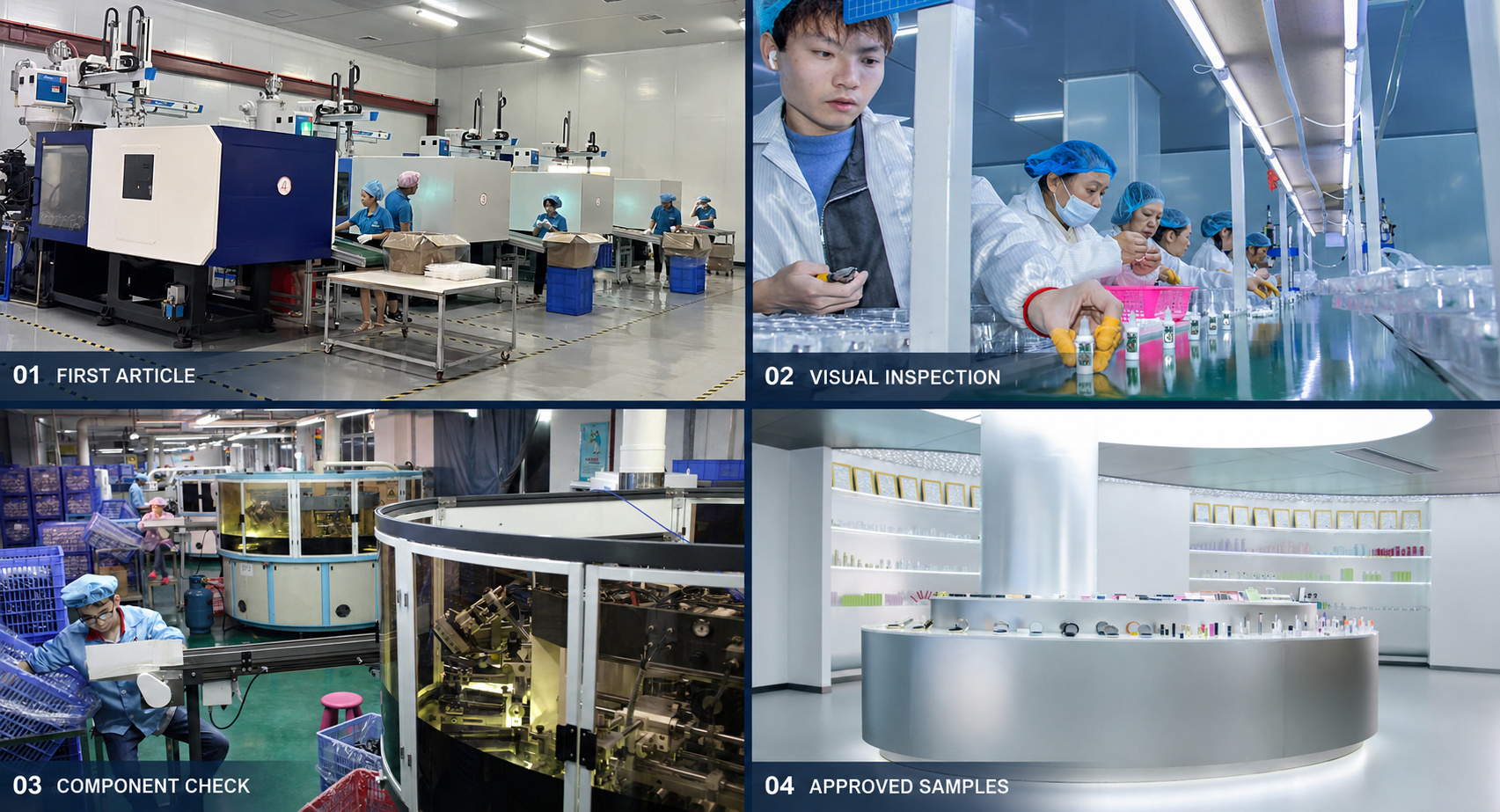 From Approved Sample to Bulk Production
Bulk production begins after the buyer approves the product structure, material, color, closure combination and applicable decoration sample.
Standard mass production normally requires approximately 25–35 days after sample approval and deposit. New molds, special colors, complex components or additional decoration may extend the schedule to around 35–50 days.
For an accurate quotation, provide the packaging type, material, capacity, quantity, preferred closure, color reference, artwork, destination and required delivery schedule. We can then confirm the suitable molding route, MOQ, sample requirements and estimated production lead time.