


Decoration Based on Material and Packaging Structure
Printing and surface finishing give cosmetic bottles, jars and tubes their final brand appearance. Cavoriq coordinates decoration for plastic, acrylic, glass and selected aluminum packaging according to the material, shape, artwork and order quantity.
Available processes may include silk-screen printing, hot stamping, labeling, coating, frosting and metallization. Not every process is suitable for every product. Curved surfaces, flexible tubes, recessed areas, sharp shoulders and textured finishes can limit the printable area or affect registration.
The decoration route is confirmed before sampling so buyers understand the expected appearance, MOQ, setup requirements and production time.
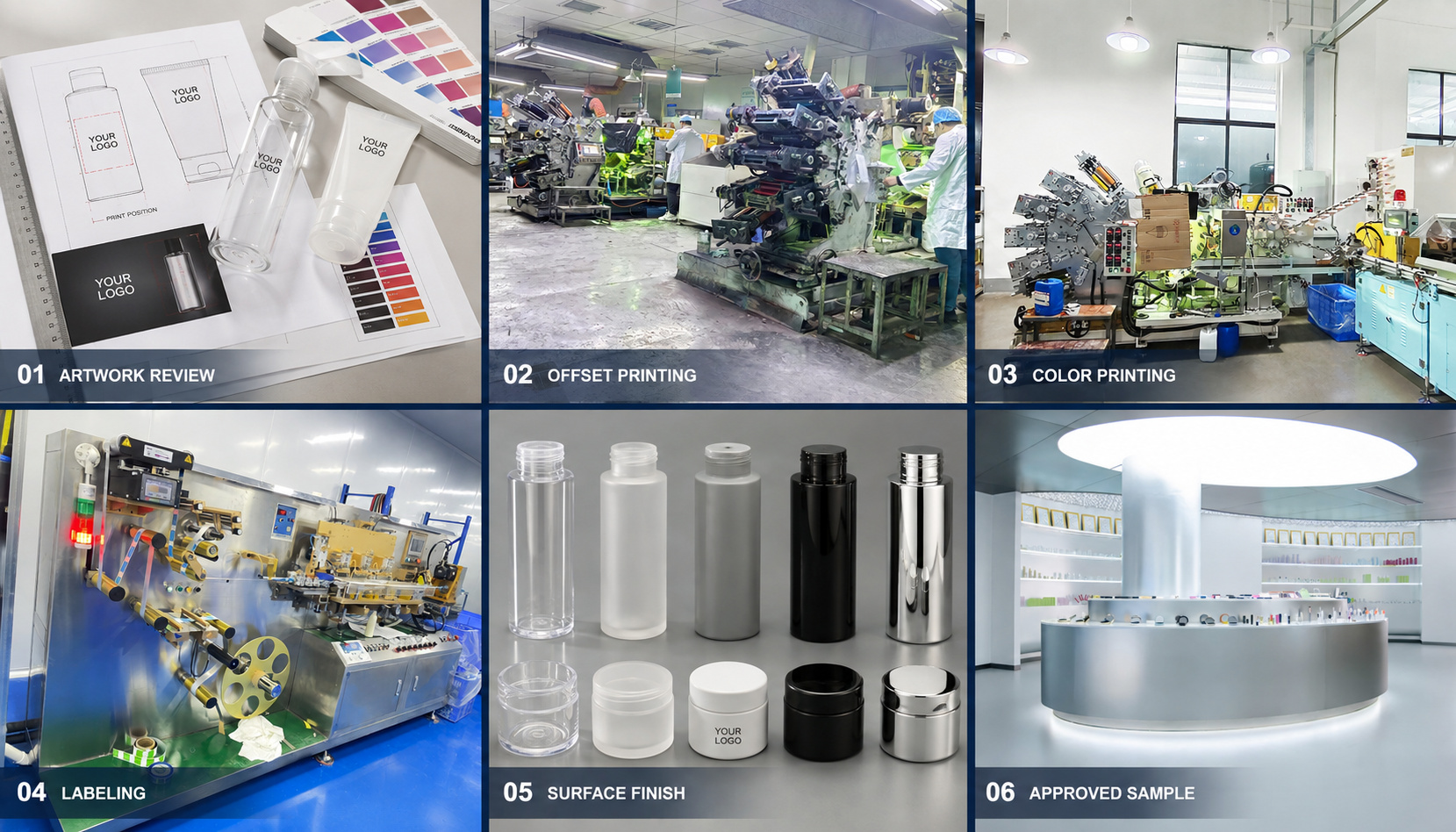 Artwork and Print Position Confirmation
Buyers should provide vector artwork in AI, EPS or editable PDF format whenever possible. The file should identify the logo dimensions, print colors and required position.
Before production, we review:
- Available decoration area
- Logo size and line thickness
- Number of printing colors
- Position on the bottle, jar or tube
- Pantone or metallic color reference
- Relationship between artwork and closure orientation
- Required front-facing presentation
Small text, fine lines and multi-color registration may require adjustment. Artwork that looks clear on a computer screen may not reproduce accurately on a curved or small packaging surface.
More artwork-specific information is available on our logo printing and decoration page.
Silk-Screen Printing and Hot Stamping
Silk-screen printing is commonly used for logos, product names and simple graphics. It can be applied to suitable plastic, acrylic, glass, aluminum and tube surfaces. The result depends on the ink system, material, surface treatment and print area.
Hot stamping transfers metallic or colored foil onto the packaging surface. Gold and silver are common choices, but other foil colors may be available. Large solid areas, fine text and strongly curved surfaces require additional feasibility review.
Print clarity, registration, opacity and adhesion are checked against the approved sample. Multiple passes or colors may increase setup time, cost and production complexity.
Labeling and Surface Treatments
Pressure-sensitive labels can support detailed artwork, multiple colors, barcodes and information that is difficult to print directly on the container. Label material, adhesive, dimensions and positioning must suit the packaging surface and storage conditions.
Coating can create transparent, opaque, gradient, matte, glossy or colored finishes depending on the material and project. Frosting is commonly used to create a soft, translucent appearance on suitable glass or plastic packaging. Metallization can provide a reflective metal-like finish on selected components.
The same finish may look different on PET, acrylic, glass or aluminum. Physical samples are therefore recommended when color and surface appearance are important. See custom colors and surface finishes for color confirmation requirements.
Decoration Samples and Approval
Customized logo or color samples generally require approximately 7–12 days, depending on the packaging structure, process and component availability.
The buyer should confirm:
- Logo size, position and orientation
- Color and opacity
- Foil appearance and edge definition
- Label alignment and adhesion
- Coating coverage and surface consistency
- Match between the container and closure
The approved physical sample becomes the reference for bulk production. Any changes to artwork, color or position should be documented before production is released through the sample development and approval process.
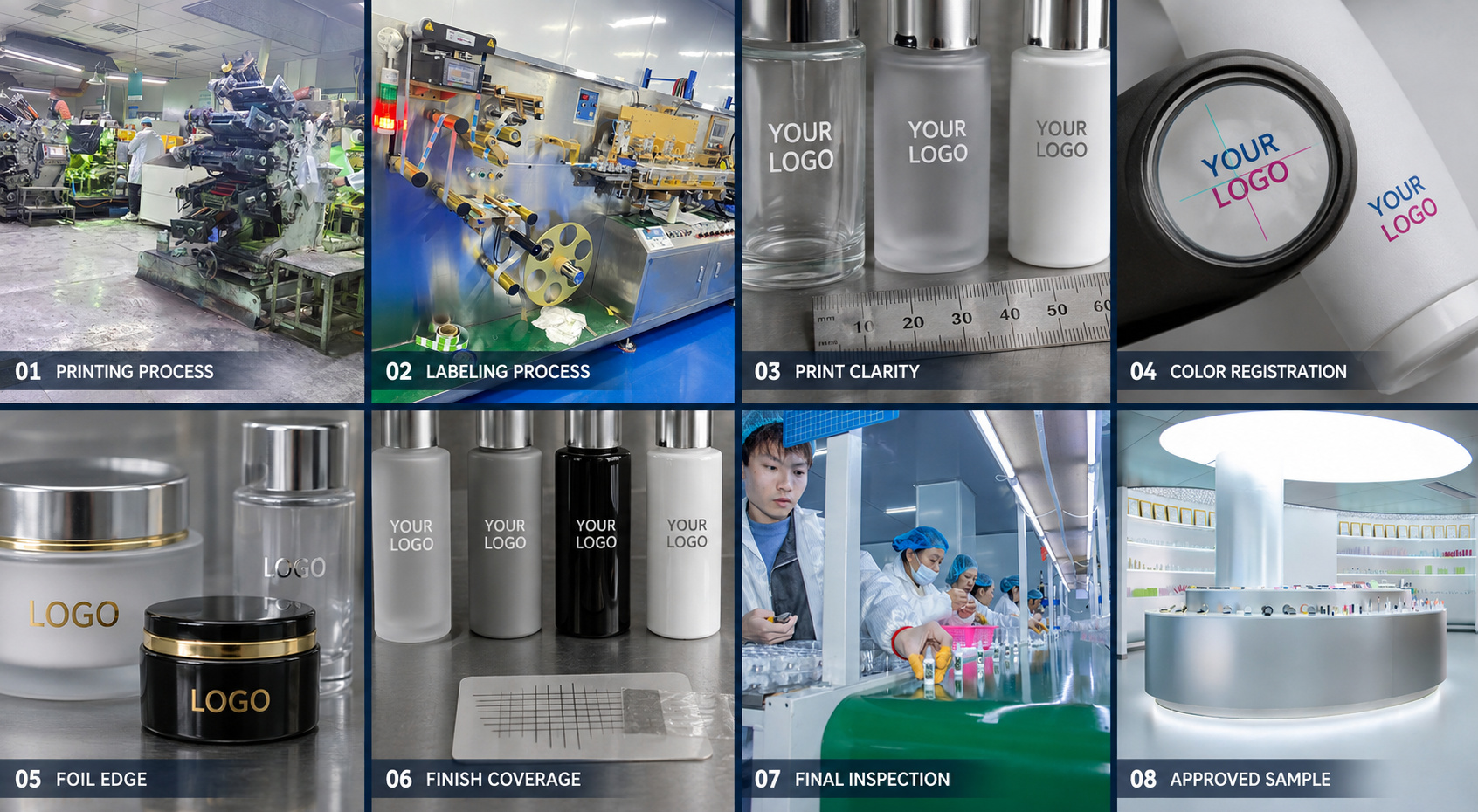 Quality Checks During Bulk Production
Decoration inspection may include color comparison, position measurement, registration, surface coverage, scratches, contamination and adhesion checks. Printed or coated components are also reviewed after assembly because handling can affect decorated surfaces.
Final inspection standards are based on the approved sample and order specification. Products are protected with suitable bags, sleeves, trays or dividers where necessary to reduce rubbing and scratching during shipment.
For a quotation, provide the packaging type, material, quantity, artwork file, Pantone reference, decoration process, packing requirements and destination. We can then confirm feasibility, MOQ, sample cost and estimated production lead time.