


Assemble a Complete Packaging System
A cosmetic bottle or jar should be evaluated as a complete packaging system rather than as separate components. The container, neck finish, pump, sprayer, dropper, cap, gasket, inner lid and dip tube must fit and function together.
Cavoriq coordinates component matching and assembly for plastic, acrylic, glass and selected aluminum cosmetic packaging. Components may be produced through different manufacturing routes, but the final combination is checked against the approved sample and order specification before bulk packing.
This service supports cosmetic brands, importers, wholesalers, contract fillers and packaging companies requiring repeatable component combinations for OEM and bulk orders.
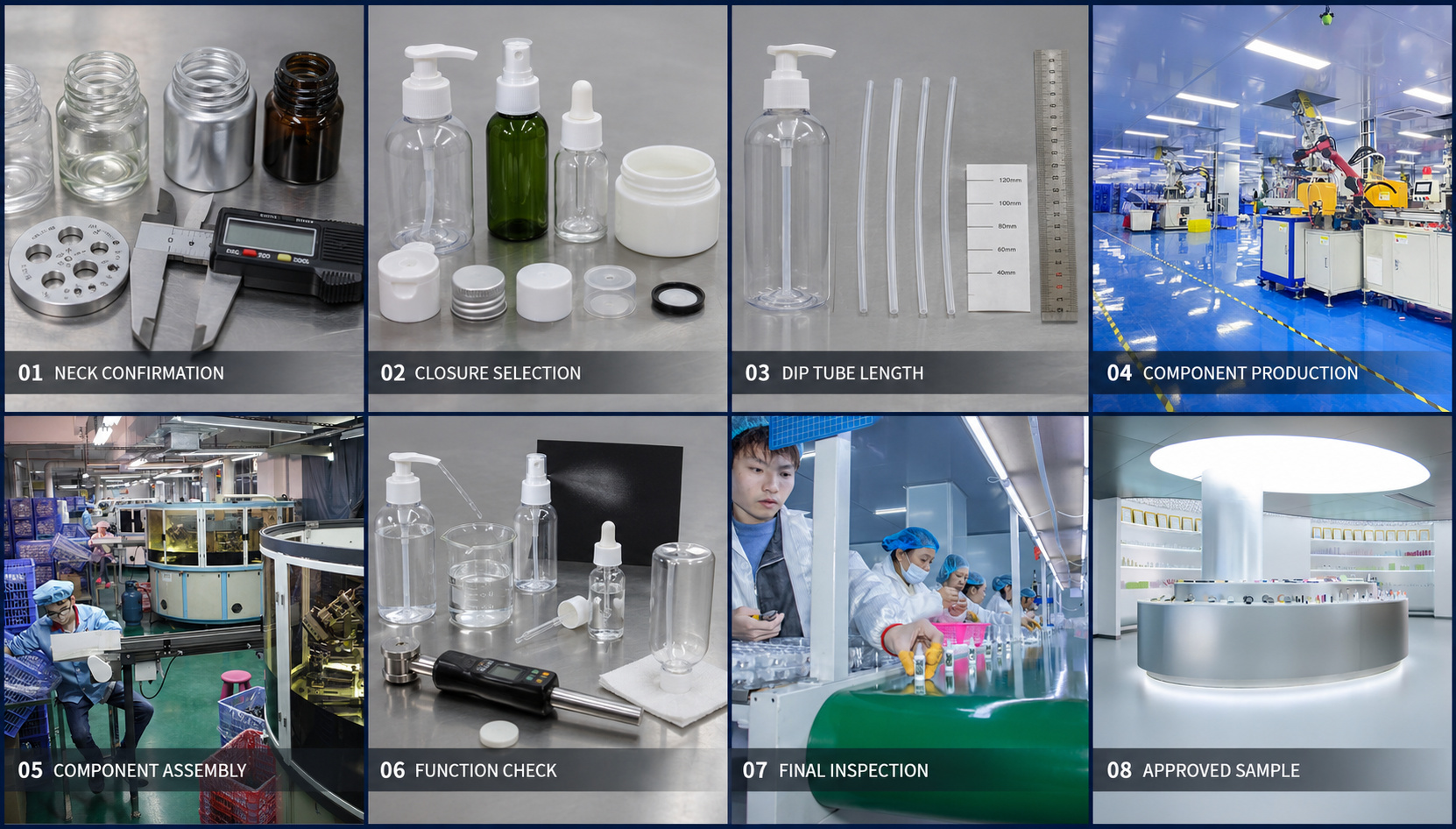 Neck Finish and Closure Selection
Component matching begins with the bottle or jar opening. The neck diameter, thread profile, sealing surface and closure height affect whether a pump or cap can be assembled correctly.
A closure that appears visually suitable may still create problems if the thread engagement, gasket compression or sealing contact is incorrect. Relevant confirmation points include:
- Neck diameter and thread structure
- Pump or cap specification
- Gasket and sealing surface
- Closure height and appearance
- Locking or snap-fit structure
- Compatibility with decoration and overcaps
Different bottle suppliers may use similar-looking necks with different tolerances. Components should therefore be checked using the actual container rather than selected only from catalog dimensions.
Our pumps, caps and closure matching page explains the selection stage in more detail.
Pumps, Sprayers and Droppers
The dispensing system should suit the intended cosmetic application. Lotion pumps, fine-mist sprayers and droppers require different output, sealing and operating characteristics.
Dip-tube length is adjusted according to the bottle height and base shape. A tube that is too short may leave excessive product in the container, while an excessively long or poorly angled tube may bend, block flow or affect assembly.
Pump output and spray pattern can vary according to the component design and product viscosity. Basic checks can be performed with test liquid, but the buyer should validate long-term performance using the actual formula.
Component Assembly and Set Matching
After components pass incoming inspection, the approved combination moves to assembly. Depending on the packaging structure, this may include pumps, collars, droppers, sprayers, caps, inner lids, gaskets, overcaps or decorative shells.
During assembly, the team checks component orientation, closure engagement, appearance, dip-tube position and packaging-set consistency. Decorated surfaces should also be protected from scratching or rubbing while parts are handled.
Packaging containing glass, aluminum or bamboo-related components is integrated according to the approved order specification and incoming inspection result.
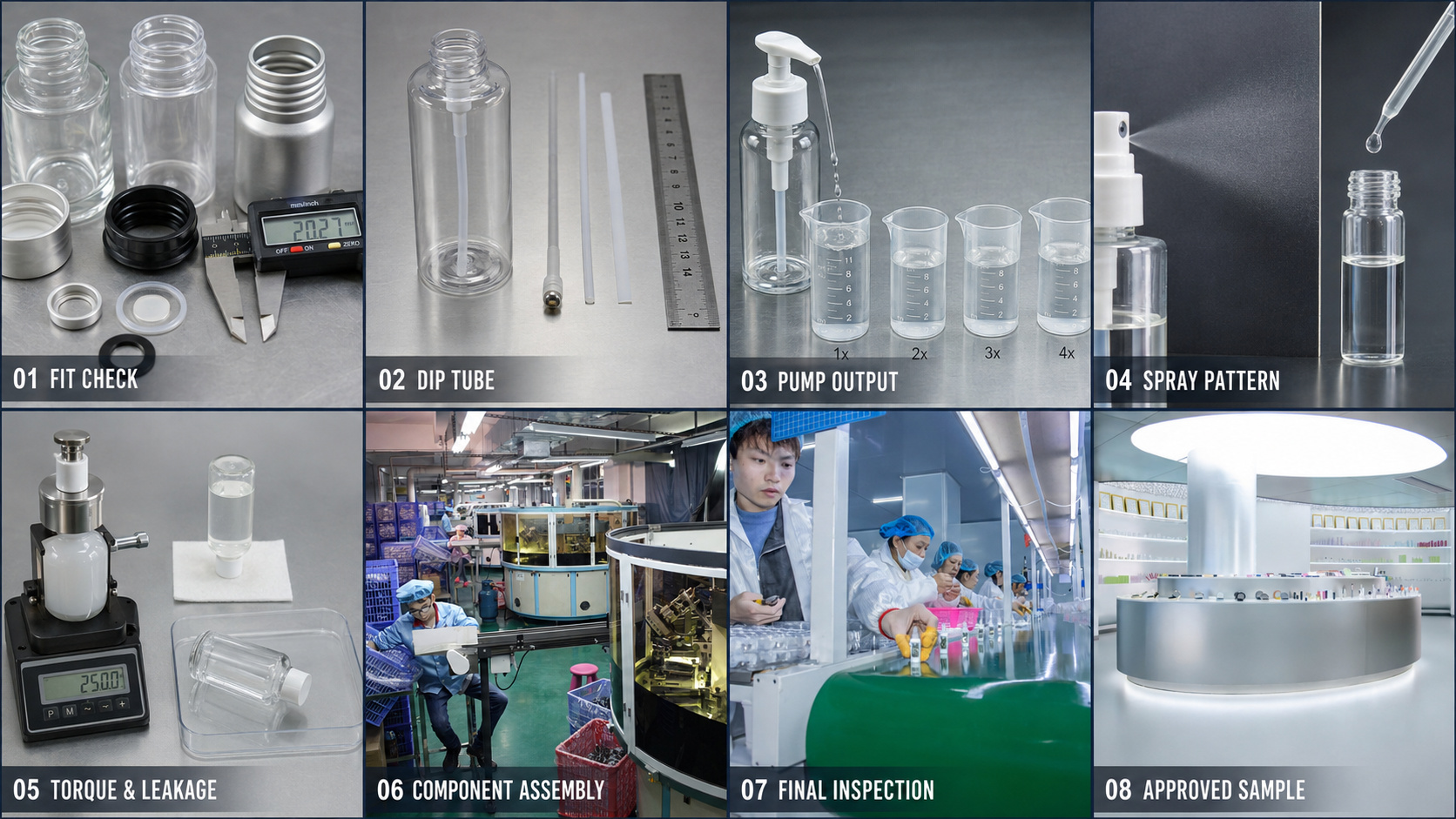 Functional and Leakage Checks
The inspection plan depends on the closure type and buyer requirements. Applicable checks may include:
- Pump operation and output consistency
- Spray pattern and actuator return
- Dropper bulb and pipette operation
- Cap engagement and opening torque
- Closure fitting and gasket position
- Basic leakage and inverted storage checks
- Appearance after repeated operation
Torque should be controlled within a practical range. A closure that is too loose may affect sealing, while excessive tightening can damage threads, distort gaskets or make the package difficult to open.
Further inspection details are available on our quality control and functional testing page.
Sample Approval Before Bulk Assembly
The buyer should approve the complete packaging combination before mass assembly. The sample should include the intended bottle or jar, closure, dip tube, decoration and relevant secondary packaging.
Stock samples normally require approximately 3–5 days. Customized color or logo samples generally take around 7–12 days. Final timing depends on component availability and the required decoration.
The sample development and approval process establishes the reference for production, functional inspection and packing.
Information Required for a Quotation
Provide the container type, material, capacity, neck specification, closure preference, intended application, quantity, decoration, packing request and destination.
If available, include the formula viscosity range, desired pump output or spray requirement. We can then confirm component options, sample requirements, MOQ, assembly route and estimated lead time.