


Inspection Based on the Approved Specification
Cosmetic packaging quality control should cover the container, decoration, closure and packing method—not only the appearance of an individual bottle or jar.
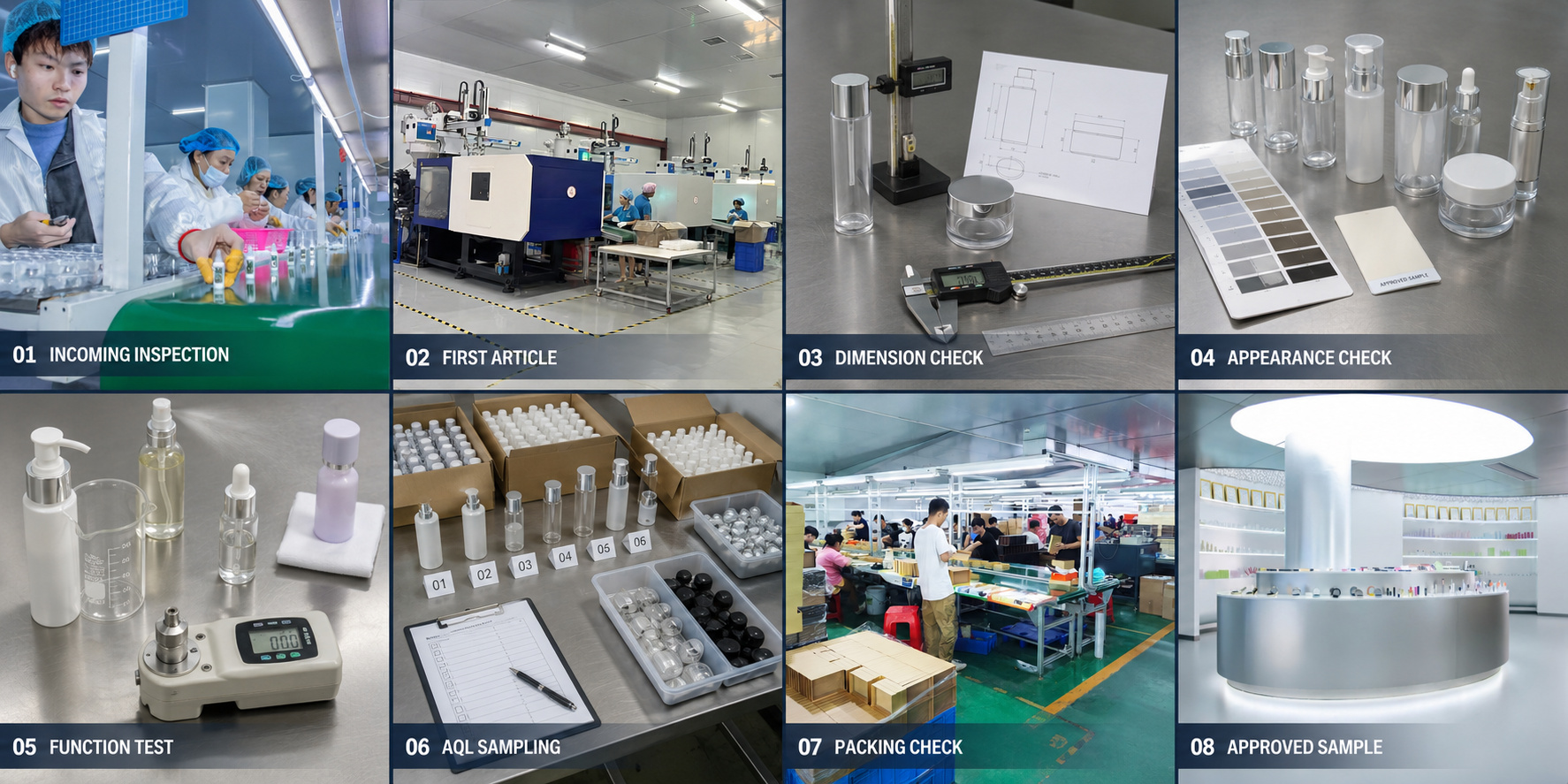
Cavoriq coordinates incoming inspection, first-article confirmation, in-process checks and final inspection for plastic, acrylic, glass, aluminum and selected bamboo-related packaging components. The inspection plan is based on the approved sample, order specification, packaging structure and buyer requirements.
This process supports cosmetic brands, importers, wholesalers, contract fillers and packaging companies that require repeatable specifications across OEM and bulk orders.
 Incoming Material and Component Checks
Incoming checks are performed before components enter decoration, assembly or final packing. The applicable inspection points depend on the material and product type.
Plastic and acrylic components may be checked for color, transparency, deformation, molding marks and dimensional stability. Glass packaging requires attention to cracks, chips, bubbles, surface defects and neck condition. Aluminum components are reviewed for dents, scratches and finish consistency, while bamboo or wood parts are checked for grain variation, cracks, deformation and fit.
Pumps, sprayers, droppers, caps, gaskets and inner components are checked against the required specification and approved combination.
First-Article and In-Process Inspection
First articles are reviewed before the main production run continues. They establish whether the mold, material, color, dimensions, decoration and assembly match the confirmed requirements.
Relevant checks may include:
- Overall dimensions and packaging weight
- Capacity and wall distribution
- Neck finish and thread structure
- Color and surface appearance
- Logo size, position and clarity
- Closure fitting and component orientation
- Packing configuration
In-process inspection helps identify variation caused by material batches, machine settings, decoration setup or extended production cycles. Nonconforming parts should be separated before they move to the next process.
Appearance and Decoration Inspection
Appearance standards should be agreed before production because acceptable variation depends on the material, finish and intended presentation.
Inspection may cover scratches, contamination, deformation, color difference, frosting, coating coverage and metallization consistency. Printed decoration can be checked for position, opacity, registration, edge definition and adhesion.
Labels are reviewed for alignment, wrinkles, bubbles and secure bonding. Printed or coated components should also be checked after assembly because handling can damage decorated surfaces.
More process-specific details are available on our printing and surface finishing page.
Closure and Dispensing Function Tests
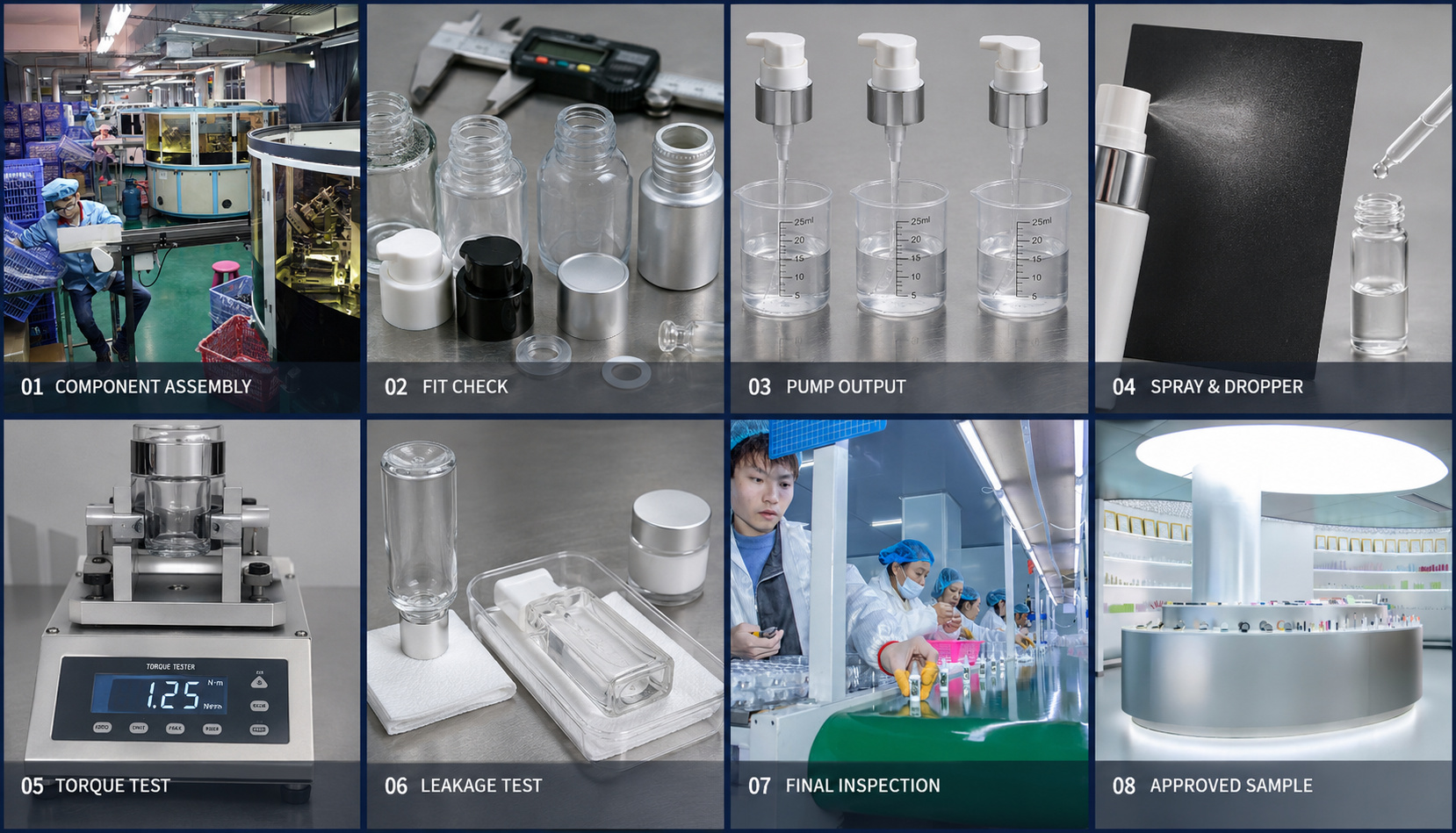
Functional inspection confirms whether the selected components operate together as an approved packaging system. Applicable tests may include:
- Bottle-to-closure fitting
- Pump operation and output
- Fine-mist spray pattern
- Dropper bulb and pipette operation
- Dip-tube length and position
- Opening and closing torque
- Basic leakage and inverted storage checks
- Component assembly stability
Testing is selected according to the packaging type and buyer requirements. Basic water-based testing does not replace compatibility testing with the buyer’s actual formula. Formula contact, viscosity, chemical resistance and long-term dispensing performance should be validated under intended filling and storage conditions.
See pump, cap and component assembly for the component-matching process.
 Final AQL Inspection
Final inspection is performed after production and decoration are completed. An AQL-based sampling plan may be used according to the order requirements and agreed inspection level.
Defects can be classified according to their effect on safety, function, appearance and saleability. The final inspection may cover quantity, dimensions, appearance, decoration, closure function, leakage and packing.
Third-party inspection can be supported when requested by the buyer. The inspection scope, sampling standard, timing and access requirements should be confirmed before production is completed.
Packing and Pre-Shipment Verification
Packing checks confirm that the approved protection and carton configuration have been followed. Depending on the product, protection may include PE bags, sleeves, trays, dividers, individual boxes, reinforced cartons and pallets.
Final quantities, carton condition, shipping marks and pallet arrangement are reviewed before dispatch. Fragile glass containers and decorated surfaces may require additional separation to reduce breakage or abrasion.
Our packaging and export shipment page explains how packing is selected for different packaging materials and shipping methods.
Information Required for an Inspection Plan
Provide the product specification, approved sample, order quantity, critical dimensions, appearance requirements, functional tests, AQL level and packing instructions.
We can then confirm the applicable checkpoints, inspection method, sample size and any project-specific testing requirements before bulk production begins.